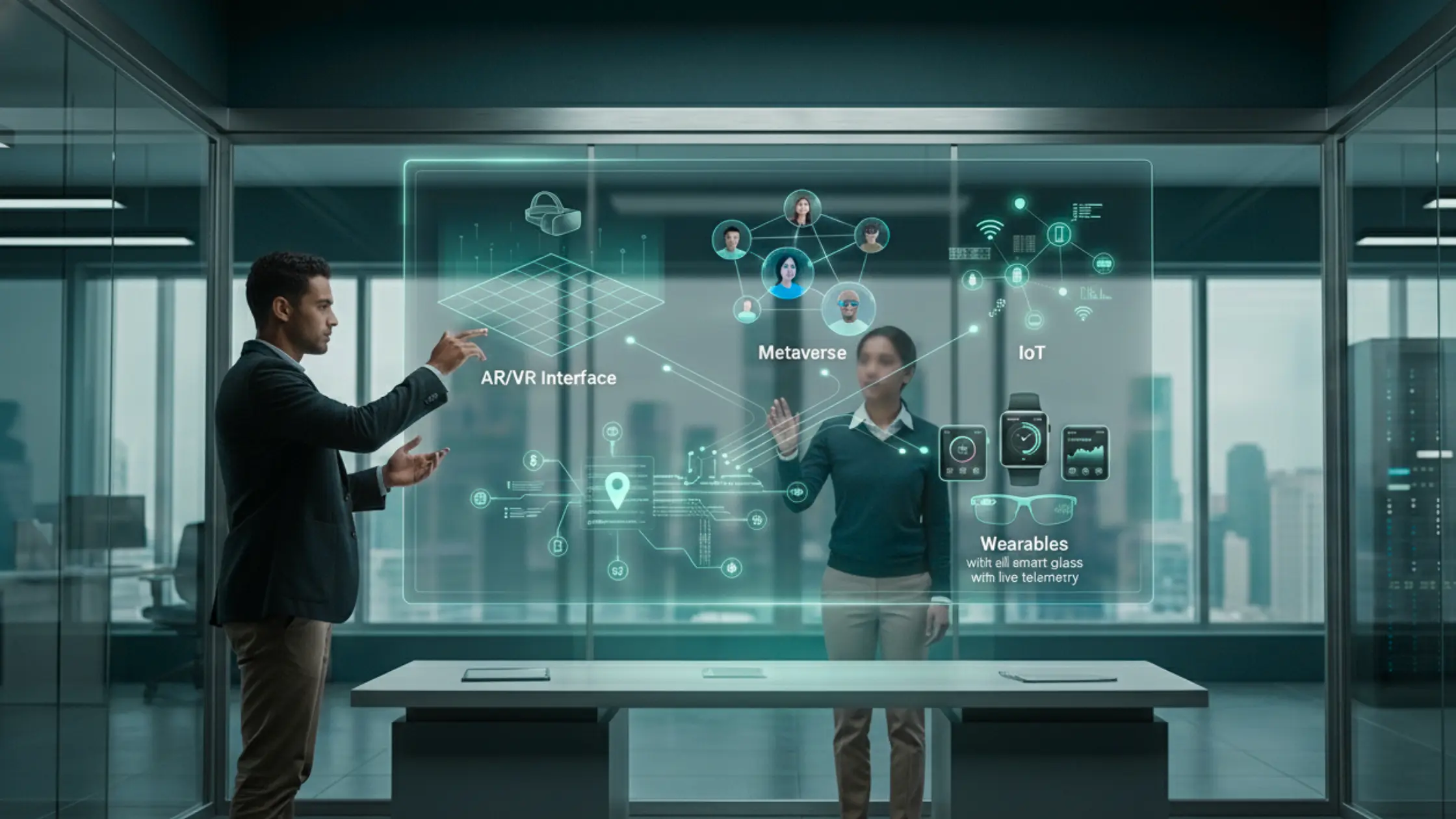
Apps no longer stay confined to mobile screens. In 2026, they are operating across smart glasses, connected environments, immersive digital spaces, and wearable devices. Nowadays, users expect apps to respond in real time, understand context, and adapt to behavior without friction. Technologies such as AR and VR reshape how people learn, shop, train, and engage. The metaverse extends apps into persistent virtual spaces. IoT connects applications with machines, sensors, and real-world data. Wearables transform apps into always-on companions. This seismic shift raises expectations for speed, intelligence, and usability across every touchpoint.
For founders, product leaders, and enterprises, success now depends on building experiences designed for movement, connection, and scale. Teams must think beyond features and focus on how users interact across devices and environments. This comprehensive guide explains how future-ready apps take shape, where business value emerges, and why 2026 rewards products built for immersive, connected, and user-driven experiences. So, stay tuned for some useful insights :
Why 2026 Marks a Turning Point
Technology adoption no longer follows slow cycles. What felt optional two years ago now defines user experience. Retail brands test virtual try-ons. Healthcare teams rely on connected devices. Fitness apps sync with wearables in real time. Even the manufacturing sector uses immersive simulations for training. This momentum signals one thing. Apps built for emerging technologies are no longer niche. They form the next layer of digital infrastructure.
AR and VR Move From Experience to Utility
Augmented and virtual reality once focused on demos and gaming. But, moving ahead in 2026, usage shifts toward daily utility. There are training simulations, remote collaboration, guided maintenance, & Interactive education.
Businesses looking to lead in this space often partner with an AR VR app development company that understands spatial design, performance limits, and device compatibility. Technology such as AR now blends digital data into real environments. VR creates controlled, immersive spaces for focus and learning.
The rise of VR gaming trends also pushes innovation in motion tracking, realism, and user engagement. These advances flow into enterprise and consumer apps alike. However, many teams now agree on one thing. AR is the future of how users interact with digital content.
Metaverse-Ready Apps Focus on Persistence
Metaverse platforms shift attention from single sessions to persistent digital environments. Users expect continuity, identity, ownership, & Interoperability.
Metaverse app development in 2026 focuses on shared spaces, avatars, digital assets, and real-time interaction. These apps demand strong backend systems, secure identity layers, and smooth 3D performance. Therefore, it’s recommendable for entrepreneurs to build platforms that adapt as ecosystems evolve.
IoT Apps Power Connected Intelligence
Connected devices now outnumber users. Sensors track movement, temperature, health metrics, and machine performance. Apps act as the control layer for this data.
Experienced iot app development companies help businesses translate device signals into actionable insights. Moreover, the pace of Internet of Things innovation accelerates as industries connect physical assets to digital systems. Iot innovation supports smarter cities, energy management, logistics, and healthcare monitoring.
The broader Internet of Things technology stack in 2026 relies on secure APIs, scalable cloud systems, and real-time analytics. This reflects a growing trend of Internet of Things adoption across both consumer and enterprise markets.
Wearables Become Core Experience Channels
Wearables no longer act as accessories. They operate as primary interfaces. They include health tracking, payments, and notifications. & context-aware feedback.
An expert wearable app development company designs apps that respect battery limits, screen size, and real-time responsiveness. The goal stays simple. Deliver value without friction.
Growth in iot wearables drives deeper integration between hardware and software. Iot wearable technology connects user data to broader platforms. This alignment between iot and wearables enables personalized, responsive experiences.
In 2026, building apps for wearable devices focuses on accuracy, privacy, and seamless sync with mobile and cloud systems.
One Product, Multiple Tech Layers
Emerging tech apps rarely rely on a single technology. A fitness app may combine wearables, IoT sensors, AR coaching, and cloud analytics. A retail app may blend AR previews with IoT inventory data and metaverse storefronts.
Building such systems demands careful architecture. Teams need clarity on data flow, latency, and scalability. Design must consider multiple interaction modes without overwhelming users.
This complexity explains why planning now outweighs experimentation. Strong foundations prevent costly rebuilds later.
Business Strategy Shapes Tech Success
Emerging technologies succeed when perfectly aligned with business goals. Not every use case needs immersion or connected hardware. The right choice depends on value delivery.
Leaders focus on measurable outcomes such as better efficiency, engagement, retention, and data accuracy. Emerging tech supports these goals when applied with intent.
Teams that treat AR, IoT, or wearables as strategy drivers rather than feature add-ons gain a lasting advantage.
Preparing for What Comes Next
In 2026, emerging tech apps demand adaptability. New devices appear, and standards keep evolving along with user behavior shifts. Therefore, businesses must be aware of the latest mobile app development trends to build an app that evolves rapidly without disruption.
This requires modular architecture, strong testing, and continuous optimization. Products built with flexibility respond faster to change. The future prefers teams who plan beyond launch and design for longevity.
Wrapping Up
Emerging technologies shape how users experience digital products. AR, VR, metaverse platforms, IoT systems, and wearables now influence real-world decisions and outcomes.
Businesses investing today prepare for sustained relevance tomorrow. The path forward lies in thoughtful design, secure systems, and user-first execution.
Apps built for emerging technologies in 2026 do more than impress. They integrate into daily life, connect environments, and deliver value where users need it most.
Frequently Asked Questions
1. What makes an app future-ready in 2026?
A future-ready app supports technologies such as AR/VR, IoT, wearables, or Metaverse use cases from day one. It scales easily, stays secure, and adapts to new user behavior fast.
2. Why are businesses investing in AR/VR and Metaverse apps now?
AR/VR improves user interaction beyond screens. On the other hand, Metaverse apps create immersive digital spaces that increase engagement, retention, and brand recall.
3. How do IoT apps add value for modern users?
IoT apps connect devices, data, and users in real time. This leads to smarter decisions, automation, and better control across daily activities.
4. What role do wearable apps play in connected ecosystems?
Wearable apps track health, activity, and context continuously. They deliver instant insights without interrupting the user’s routine.
5. How do you choose the right development partner for emerging tech apps?
Look for experience across AR/VR, IoT, and wearables. Strong security practices and long-term support matter more than speed alone.