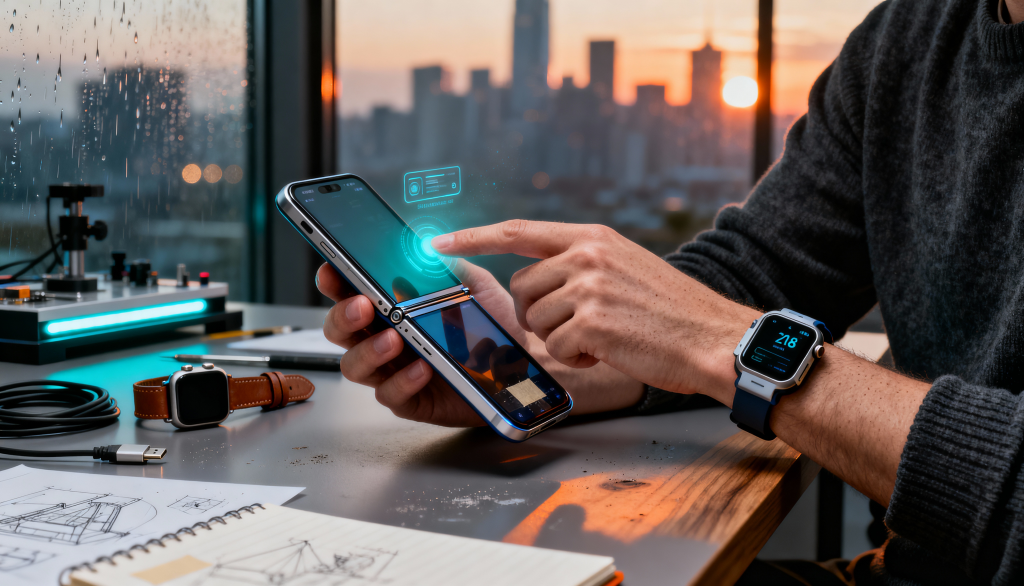
The way we interact with others and businesses alike has always been influenced by new technologies that keep coming. Plus, in recent years, two types of devices have captured the imagination of both developers and users: wearables and foldable devices.
If you’re someone involved or deeply interested in software design, building apps for wearables and foldable devices is not a futuristic experiment. In fact, it is now an essential skill set.
In comparison with traditional smartphones, that are matured over a decade of development, wearables and foldables are still in the early stages of evolution. This gives a great opportunity to developers to understand and influence how users use them.
In this article, you will learn about how wearables and foldable devices are bringing more opportunities to the app-development world. You will also explore various elements that make app building for such devices a great opportunity for many developers.
Understanding the Landscape
From smartwatches to fitness bands and even AR glasses, wearables focus on quick interactions, health tracking, and notifications. On the other hand, foldables attempt to blend portability with large-screen utility. This is the flexibility that gives users a tablet-like experience without compromising the convenience of a smartphone.
Furthermore, the market for such devices is experiencing a major boom. Thanks to advancements in technologies and consumer demand for multifunctional devices, this boom is expected to continue. Recent data reveals that the market for foldable devices is estimated to reach US$118.87 billion by 2030, growing at a CAGR of 30.59%.
Such a surge showcases a shift from niche gadgets to mainstream adoption. Shipments are supposed to reach 19.8 million units globally this year. On the other hand, the overall smartphone market is supposed to grow by just 1% in 2025, as compared to the wearables and foldables market, which is accelerating 6% every year. To keep up with this growth, businesses are closely watching the top wearable app development trends that shape user engagement and app innovation.
Core Principles of Wearable and Foldable App Development
Some core principles involved in the development of apps for wearables and foldable devices include:
1. Adaptive UI Design
Apart from having just “responsive” layouts, foldables and wearables demand more. The app you develop should adjust between compact cover screens and expanded displays.
You can ensure legibility and intuitiveness of your content by using window size classes, posture detection, and hinge-aware layouts. This will also make your content appropriate across different types of screens.
3. State Preservation and Screen Continuity
Screen continuity is a feature that many users expect when using foldable devices. You don’t want your tasks to be interrupted during fold/unfold transitions and switching tabs on your Android watch or foldable device, right?
Whether the user is watching a video, filling out a form, or scrolling through the feed, you need to ensure that the continuity remains consistent. It is important to preserve UI across every screen configuration.
3. Multi-Window and Multitasking Support
It is foldable devices that shine the most when users run multiple apps side by side. While developing an app, you need to ensure it supports multi-window on foldable devices.
It should also handle resizable surfaces on watches, drag-and-drop actions, and flexible dialogues without interrupting your workflow. This will make your app productivity-friendly and future-ready.
4. Posture-Aware Experiences
Apart from size changes, foldables bring unique postures like tabletop, book, and tent. If your app adapts intelligently, like moving video playback to the top and controls to the bottom, or splitting chat and media views, you will be able to deliver a premium experience that is aware of postures.
5. Performance and Optimization
As larger canvases and heavier multitasking are becoming the norm, hurdles within the performance can show up quickly. However, you can get rid of these bottlenecks with the help of efficient rendering, optimized memory usage, and careful battery management.
Your app should scale gracefully, which will help you ensure smooth transitions and lag-free interactions across different fold or unfold scenarios.
The Three Main Aspects of Great Wearable and Foldable UX
Here are the three main aspects of a great UX in wearable and foldable devices:
1. Adaptive UI Designs
Whether you’re making your UI responsive or posture-aware, you should start with the breakpoints and layer posture-specific affordances:
- Two-Pane Master Detail on the Inner Screen: Sliding pane layout and adaptive lists or cards can be really helpful. They are fold-aware and can place panes on any side of the hinge automatically.
- Hinge-Aware Content: You need to avoid placing tappable controls under the fold. Instead, you should route them to the “Safe” pane. Tools like WindowManager’s WindowLayout will tell you when such folds exist.
- Tabletop(Flex) Mode: When the device is half-opened on a table, you should give more priority to media on the top pane and controls. Mobile devices like Samsung’s foldable smartphones openly support the Flex mode patterns that are already expected by users.
2. Multi-Window Support on Foldable Devices
Foldables are best when users drag apps into split-screen or even windows styled like a desktop. You should make every surface resizable, test for minimum widths and height-constrained states for watches and other wearables, and avoid assumptions that are hardcoded.
Bigger foldables can run two or three apps at once. Some launchers also support desktop windowing. You should ensure “Window-Literacy” for your app while it runs on such devices.
3. Screen Continuity in Foldable Apps
You should deal with folds/unfolds and rotations as moments, which will improve context, not interrupt it. For that, you can persist ephemeral UI state(playback, inputs, scroll), avoid bouncing network calls during recreation, and render above-the-fold content first on the cover screen.
Google explicitly states that following these guidelines will help you get immediate dividends in user experience.
To Summarize
The app development for wearables and foldable devices in 2025 isn’t just about supporting a weird device. In fact, it is more about unlocking a bigger stage for your app on every bigger screen.
Users reward apps that ensure a steady flow of tasks, as screen changes, split-screen functionality, and posture-aware layouts feel intentional. If you invest in adaptive UI design for wearables and foldables, you can create an experience that stands out today.