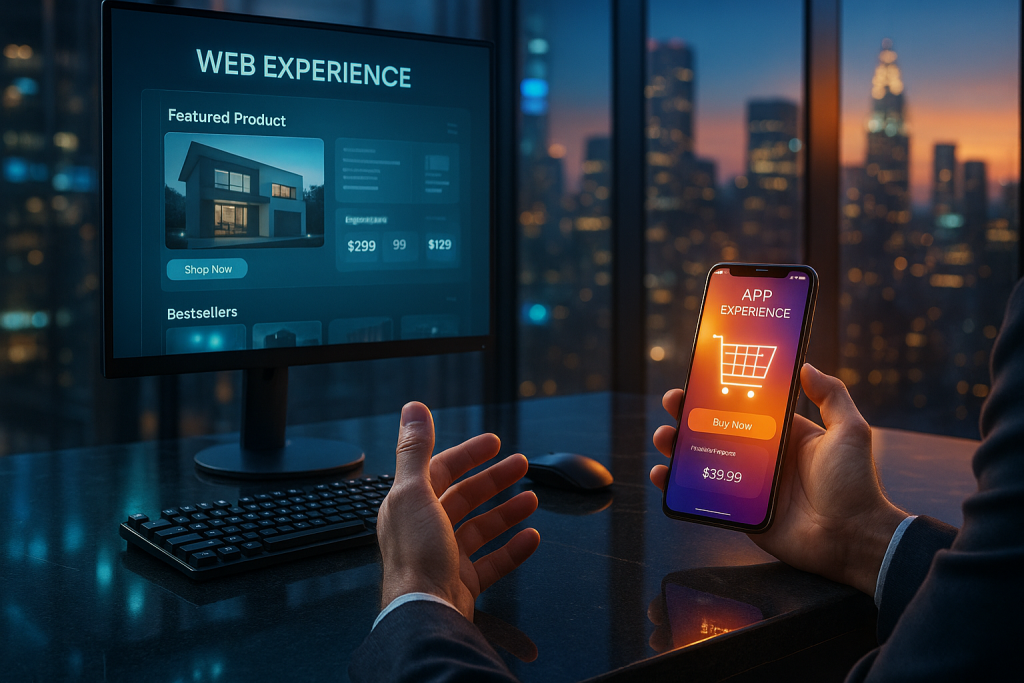
Picture: Your consumer is leisurely scrolling on their phone, only half paying attention to their TV, when they happen to find your store. Do they tap and open an app? Do they click and browse through a website? The battle of eCommerce apps and websites is not about technology, but how your buyers experience your brand. Apps promise intimate relationships with customized alerts and one-tap access. Websites offer open arms, no need for downloading anything!
However, the real question you should be asking is: does your business need the sleek, loyalty-enhancing appeal of an app, or the broad-sweeping, laid-back ability of a website? Your choice may vary depending on whether you are a fledgling business or an experienced seller because which option suits your needs ultimately depends on your audience, budget, and aspirations. Let’s sort through it all and figure out what option is right for you.
E-commerce Apps
WordPress plugins let your website perform powerful tasks, and you don’t need to be a tech expert to use them. For example, require a contact form? There’s a plugin for that. Want to speed up your site? Sure, there’s a plugin for that. However, the challenge is that not all plugins are equally effective. Some are bulky, some slow your site down, and others won’t do what you want!
That’s where pro WordPress plugin development comes into play. Instead of using generic plugins, you can have custom ones designed specifically for your site. A specific feature, a better experience overall, or enhanced security can all be achieved by the right plugin, and take your site from blah to whoa. And guess what else you don’t even have to think about the coding, just get to enjoy your new site doing what you always wanted it to do! If you do want to bring this level of customization to your site easily, working with a custom WooCommerce development company can help to ensure that your online store works exactly how you want it to work!
If you are ready to find out what WordPress can do, then you are also ready to find out what custom plugins can do for your site. We can help you combine the perfect web presence into a smarter, faster, and uniquely you experience.
E-Commerce Websites
Just think: a store that never closes; a store that doesn’t require rent; a store that is open to customers all over the world. That is your e-commerce website. Whether someone’s on a laptop, tablet, or phone, your store is just a click away, no downloads, no waiting.
These websites are smart. They adjust to any screen size, so shopping always looks good, whether on a giant desktop or a tiny phone screen. And with tools like WooCommerce, setting one up is easier than ever, no tech wizardry needed.
For businesses, websites are often the cheaper, simpler choice compared to apps. You get all the essentials—product listings, secure payments, and customer reviews without the extra cost. Less hassle, same great sales. Custom WooCommerce development delivers features and integrations customized to suit your business requirements. If you decide to go with a website for your eCommerce platform, the design and usability will play a huge role in user engagement and conversions. That’s why it’s important to find the best web design company that understands your brand and customer needs.
Evaluating E-Commerce Apps vs Websites
To sell online, consider whether to build an app or a website. Apps offer a personal touch but require more time and money. Websites are simple, cheaper, faster, and accessible on any device. The decision will depend on your objectives and if you require speed, reach, or greater engagement, we will be there to help make the best choice for your business.
1. Development Cost
Let’s talk money. When building an online store, your budget plays a huge role in deciding between a website and an app. And trust us, the difference isn’t small.
Websites are the budget-friendly choice. WooCommerce allows you to create a complete online store affordably. No hefty licensing fees, no crazy development costs, just a solid, scalable store that grows with your business. Need custom designs or special features? Even then, tweaking a website costs way less than building an app from scratch.
Apps? They’re the premium option. Think double the work (and cost) since you need separate versions for iOS and Android. Add sleek designs, smooth performance, and constant updates to match new phone software, and the bills pile up fast. Great for big brands, but tough for startups watching every penny.
So, if you want more bang for your buck, a website is the smarter pick. But if you’ve got the budget and need that app-exclusive shine? Go for it. Either way, knowing the costs upfront helps you spend wisely and sell smarter.
2. Development Time
In eCommerce, time is money. Each day you delay your launch, you miss out on sales. So, how quickly can you get your store active?
Websites can fly up. A simple eCommerce store can be established with WooCommerce in days and not months. Because you will be using pre-packed themes and plugins, you don’t have to invent the wheel!
Apps? They’re more like marathons. Include design modifications, app store approvals, testing on many devices, and you are looking at months of work until your first sale.
If you’re eager to begin selling, setting up a website is the way to go. But if you’ve got time to spare, an app could be worth the wait. Choose wisely, your customers won’t wait forever!
3. Accessibility
Would you rather click a link and start browsing immediately? Or do you like downloading apps just to see what’s in stock? Exactly. That’s why accessibility matters so much for your online store.
Websites are like an open door. Anyone can walk in. No passwords, no downloads, just a quick search and they’re browsing your products. It works on every device, whether it’s an old laptop, a tablet, or the latest smartphone. Your customers don’t need to think, just click and shop.
Apps are more like a VIP club. Sure, they’re sleek and fast, but first, customers have to find your app, download it, and sign up. That’s a lot of steps before they even see your products. Many people won’t bother unless they already love your brand.
So, if you want to reach the most people with the least hassle, a website is the way to go. Save the app for later, when you’ve got loyal fans who want that extra convenience. Because in eCommerce, the easier it is to shop, the more sales you’ll make. Simple as that.
4. User Experience
No one likes complicated shopping – it doesn’t matter if we are shopping on a site or an app, simple is better! Sites feel like your local grocery store, familiar, trustworthy, and easy to get around. They behave the same whether you are on your phone on the train or your laptop at home. The best part? No learning curve. Customers already know how to browse, click, and checkout. It’s shopping made simple.
Apps are more like a personal shopping assistant – they remember what you like, notify you about deals, and can even make smart suggestions. Features like one-tap purchases, saved payment methods, and exclusive app-only offers create a VIP experience. But here’s the catch: you’ve got to convince customers to download it first.
Ultimately, delivering a great user experience depends on understanding your customers. Want to cast the widest net? Go to a website. Building a loyal fanbase? An app could be worth the investment. Either way, keep it simple, keep it smooth, and watch those sales roll in.
5. SEO and Visibility
Think about how you find new products online. You probably Google it, right? That’s why visibility matters so much for your online store. You want to show up when potential customers are searching for what you sell.
Websites are search engine magnets. With some smart SEO work using the right keywords, creating helpful content, and optimizing your product pages, you can appear in Google searches for free. This means strangers can discover your store just by searching for products like yours. Tools like Google Analytics then help you understand these visitors better, so you can keep improving.
Apps live in a different world. They don’t appear in Google searches at all. Instead, you’re relying on app stores, and let’s be honest, most people aren’t browsing app stores looking for new shopping apps. Even with App Store Optimization (ASO), you’re mainly reaching people who already know your brand.
The bottom line? If you’re looking to bring in more customers, having a website is your greatest tool. An app is great for keeping existing customers engaged, but it won’t help much with discovery. Start with a website to get found, then consider an app later for your loyal fans. After all, you can’t build a customer base if no one can find you. When opting for a website, optimizing for search engines is crucial. Strategies like effective SEO for eCommerce product pages play a key role in organic visibility.
Conclusion
At the end of the day, whether to go with an eCommerce app or website is primarily driven by your business objectives and target market. If you’re just starting or are looking to reach a large audience, while keeping costs down, a website is the answer. They can be built quite affordably and quickly, they suit all users, and there are no downloads required! You can also reach new customers via SEO, without the payment of a digital ad.
However, if you have an established customer list and provide them with a personalized experience, then an app could be an investment worth making. Just keep in mind, they will cost more, take longer to build, and don’t contribute much to getting new shoppers. For most businesses, they do best to start with a website, and when they have grown, they add an app when they are ready. No matter which option you go with, as long as you make shopping easy and fun, your customers will keep coming back.