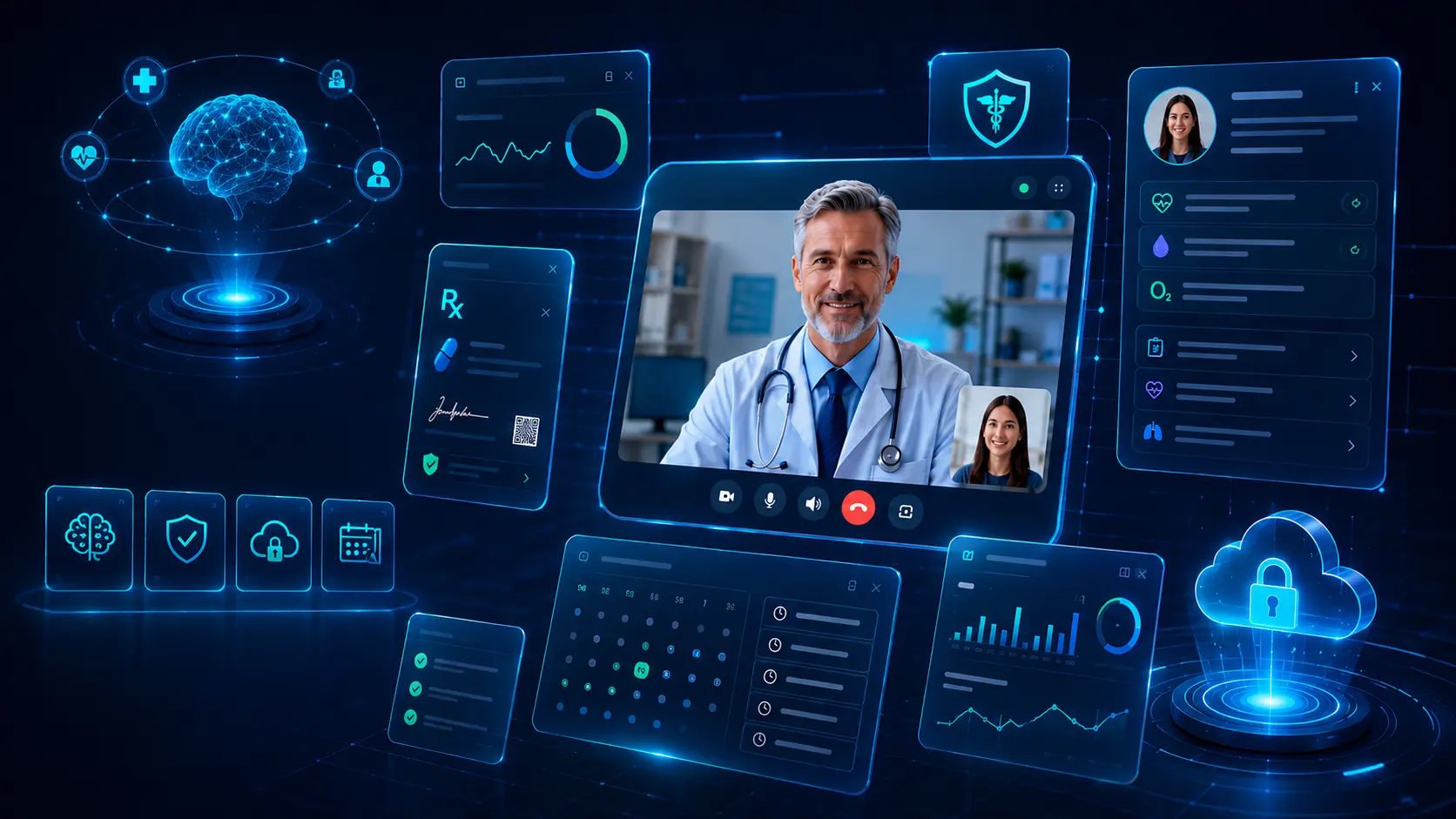
The healthcare industry has undergone a permanent digital transformation. What started as an emergency pivot during global lockdowns has now crystallized into the standard expectation for modern patient care, making telemedicine app development a core focus for providers. Today, patients no longer want to sit in crowded waiting rooms for a routine consultation, and physicians need streamlined digital workflows to manage their growing caseloads effectively.
Building a healthcare application is no longer just about convenience; it is about survival in a hyper-competitive medical landscape. However, telemedicine app development is vastly different from building an e-commerce platform or a rental marketplace. It requires rigorous adherence to patient data privacy laws, seamless integration with existing Electronic Health Records (EHR), and a flawlessly intuitive user interface for varying demographics.
If you are a healthcare provider, a startup founder, or an enterprise looking to enter the mHealth (mobile health) market, this comprehensive guide covers everything you need to know about building a resilient, compliant, and highly profitable telemedicine app in 2026.
The State of Healthcare App Development in 2026
The telemedicine market is expanding at an unprecedented rate. Moving through 2026, the demand for decentralized healthcare solutions, such as remote patient monitoring, digital prescriptions, and on-demand mental health counselling, is skyrocketing.
Modern patients treat medical care similarly to consumer services: they expect speed, transparency, and digital accessibility. Investing in a telehealth app allows clinics and hospitals to reduce no-show rates, optimize doctor schedules, cut administrative overhead, and drastically expand their geographical reach. For startups, solving niche problems within the healthcare ecosystem, such as chronic disease management or elderly care, presents a massive revenue opportunity.
Must-Have Features for a Successful Telemedicine App
A robust telehealth platform requires two distinct interfaces that communicate seamlessly: one for the patient and one for the healthcare provider.
Essential Features for the Patient Panel
To ensure high user retention and a frictionless experience, your patient-facing app should include:
- Secure User Registration & Profile Management: Patients must be able to upload medical history, insurance details, and personal demographics securely.
- Advanced Search & Filtering: Users need to find specialists based on availability, ratings, consultation fees, and spoken languages.
- Appointment Scheduling: A dynamic calendar integration allowing patients to book, reschedule, or cancel virtual visits without calling the front desk.
- HD Video Conferencing & Chat: The core of any telemedicine app. High-quality, low-latency video streaming combined with secure text messaging for follow-ups.
- Secure Payment Gateway: Integration with credit cards, digital wallets, and health insurance APIs to process consultation fees.
- E-Prescriptions & Pharmacy Routing: The ability for patients to receive digital prescriptions and automatically forward them to their local pharmacy.
Essential Features for the Doctor Panel
Physicians require a dashboard optimized for efficiency and clinical accuracy:
- Schedule & Availability Management: Doctors should have total control over their calendar, setting specific hours for online consultations.
- EHR / EMR Integration: Immediate access to a patient’s comprehensive medical history, past diagnoses, and laboratory results before the consultation begins.
- Digital Prescription Generator: A compliant module that allows doctors to assign medications without manual paperwork.
- Earnings Analytics: A transparent dashboard showing completed appointments, pending payments, and overall revenue.
Crucial Compliance and Security Standards (HIPAA, GDPR, HITECH)
If there is one area where telemedicine app development leaves absolutely zero room for error, it is regulatory compliance. Handling Protected Health Information (PHI) makes your application a prime target for cyberattacks.
If your app targets the United States market, it must be HIPAA (Health Insurance Portability and Accountability Act) compliant. This requires end-to-end data encryption, secure data storage architecture, auto-logouts, and strict access controls. Similarly, apps operating in the European Union must strictly adhere to GDPR, ensuring users have the right to be forgotten and explicit consent mechanisms for data processing.
To prevent catastrophic data breaches, you must stay ahead of modern cybersecurity threats. Keeping up with the latest mobile app security trends, such as zero-trust architecture, multi-factor authentication (MFA) and biometric logins are non-negotiable when building trust with both patients and regulatory bodies.
Choosing the Right Tech Stack: Native vs. Cross-Platform
When planning your telehealth product, you will inevitably face the dilemma of choosing the underlying technology framework.
- 1. Native Development (Swift for iOS, Kotlin for Android): If your application relies heavily on complex features like real-time remote biometric monitoring (via wearables) or requires ultra-high-performance video rendering, native development is the gold standard. It offers superior performance and direct access to device hardware.
- 2. Cross-Platform Development (Flutter, React Native): For many startups aiming to launch an MVP (Minimum Viable Product) quickly, cross-platform frameworks are the logical choice. They allow developers to write a single codebase that deploys across both iOS and Android platforms, significantly reducing development time and costs. If you are unsure which route aligns with your budget and technical requirements, evaluating when to choose cross-platform development services can help you make an informed architectural decision.
Integrating Advanced Technologies: AI, IoT, and Big Data
To build an app that truly stands out in 2026, basic video calling is not enough. The most successful healthcare platforms are leveraging next-generation technologies:
- Artificial Intelligence (AI): AI-powered chatbots can handle initial patient triage, asking basic symptom questions before routing the user to the correct specialist. Embracing AI-driven app development not only reduces physician burnout but also dramatically improves the patient experience through immediate response times.
- Internet of Things (IoT): Integrating with wearable devices (like Apple Watches or continuous glucose monitors) allows doctors to monitor vital signs like heart rate, blood pressure, and oxygen levels in real time during a virtual visit.
- Big Data Analytics: Aggregating anonymous patient data helps hospital administrators predict seasonal illness spikes, optimize staffing, and identify macro-level health trends.
How Much Does Telemedicine App Development Cost?
Estimating the cost of medical app development depends entirely on the complexity of the features, the geographic location of your development team, and the strictness of local compliance laws.
As a general baseline in 2026:
- Basic MVP (Minimum Viable Product): $35,000 – $55,000. This includes basic user profiles, simple video consulting, standard scheduling, and basic compliance.
- Mid-Level Application: $60,000 – $100,000. This adds EHR integrations, payment gateways, e-prescriptions, and advanced security protocols.
- Enterprise-Grade Platform: $120,000+. This includes custom AI triage bots, IoT wearable integrations, advanced analytics dashboards, and robust multi-regional compliance architecture.
Note: Always budget an additional 15-20% for post-launch maintenance, server costs, and iterative updates based on user feedback.
A 5-Step Process to Launch Your Healthcare App
- Market Research & Compliance Auditing: Before writing a single line of code, clearly define your target audience (e.g., pediatricians, mental health therapists) and consult with legal experts to map out your regional compliance requirements (HIPAA, PIPEDA, GDPR).
- UI/UX Prototyping: Healthcare apps must be incredibly intuitive. Elderly patients, who represent a large demographic of telehealth users, must be able to navigate the app without confusion. Focus on large typography, high contrast, and simplified user flows.
- Development & API Integration: Your development team will build the frontend interfaces while setting up the backend architecture. This phase includes integrating third-party APIs for video streaming (like Twilio or Agora) and secure payments (like Stripe).
- Rigorous QA & Security Testing: Unlike a standard app, a telemedicine platform requires intensive penetration testing to identify data vulnerabilities.
- Deployment & Marketing: Launching the app on the App Store and Google Play requires careful App Store Optimization (ASO). To ensure your rollout goes smoothly, follow proven strategies for a successful mobile app launch, ensuring you gather early user feedback to refine the software.
Final Thoughts
Telemedicine app development is complex, highly regulated, and requires a significant upfront investment. However, the long-term ROI is substantial. By building a secure, accessible, and efficient platform for remote care, businesses are not only launching profitable digital products but also contributing to the modernization of healthcare delivery.
The success of a telemedicine platform depends heavily on choosing an experienced mobile app development company with expertise in healthcare compliance, data security, and scalable architecture. Prioritizing patient experience, platform reliability, and long-term scalability creates a stronger foundation for sustainable growth in the evolving telehealth market. Businesses looking to evaluate trusted development partners and industry-recognized healthcare app agencies often explore platforms like AppFirmsReview for informed decision-making.
FAQs
1. What is telemedicine app development?
Telemedicine app development is the process of building secure mobile or web applications that allow healthcare professionals to diagnose, consult, and treat patients remotely via video conferencing, secure messaging, and digital prescriptions.
2. How long does it take to develop a telehealth application?
Building a standard telemedicine MVP typically takes 3 to 5 months. A fully custom, enterprise-grade application with complex third-party integrations (like EHR systems and IoT wearables) can take 6 to 9 months to launch.
3. What happens if my healthcare app is not HIPAA compliant?
If your app handles the medical data of US citizens without adhering to HIPAA regulations, you can face severe penalties, including massive fines (ranging from $100 to $50,000 per violation), criminal charges, and immediate removal from app stores.
4. Can telemedicine apps integrate with wearable devices?
Yes. Modern telemedicine platforms frequently use IoT integrations to connect with smartwatches, fitness trackers, and specialized medical wearables. This allows doctors to access real-time health data such as heart rate, ECG readings, and sleep patterns.
5. How do telemedicine apps make money?
Common monetization strategies include charging a commission or transaction fee per consultation, offering monthly subscription models for unlimited basic care, licensing the software as a SaaS product to independent clinics, and featuring sponsored placements for specialists.