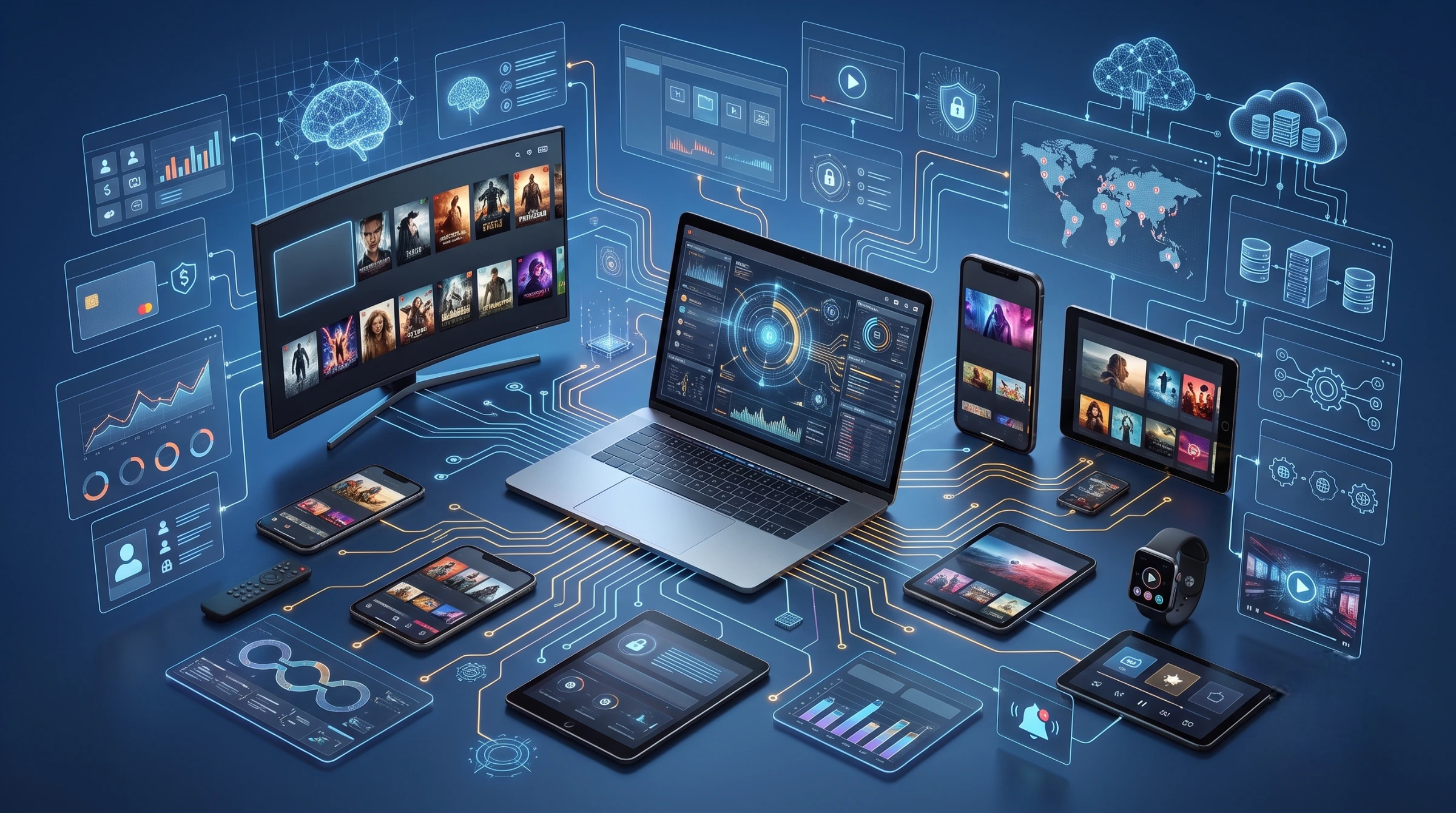
The global appetite for on-demand video streaming continues to grow as consumers increasingly prefer digital entertainment across smartphones, smart TVs, tablets, and web platforms. This shift has encouraged startups, media companies, educational platforms, and niche content creators to launch their own OTT (Over-the-Top) streaming services to build recurring revenue and stronger customer relationships.
However, building a successful streaming platform requires far more than replicating Netflix’s interface. Businesses must deliver seamless video playback, personalized content discovery, secure payment systems, scalable infrastructure, and a user experience that keeps subscribers engaged over time.
This Netflix clone app development guide explores the essential features, technology stack, development process, estimated costs, and monetization strategies businesses should consider before investing in an OTT platform.
Why Invest in a Netflix-Like Streaming App?
The OTT market presents significant opportunities for businesses seeking sustainable, subscription-driven growth. Unlike traditional media businesses, streaming platforms provide direct access to audiences while creating predictable recurring revenue through subscriptions, advertising, or premium content.
Beyond entertainment, the Netflix model has expanded into several industries, including:
- Online education platforms
- Fitness and wellness streaming
- Religious and spiritual content
- Corporate training portals
- Sports broadcasting
- Healthcare and wellness education
A custom streaming application also enables businesses to maintain complete ownership of their content, customer data, and monetization strategy. Instead of relying on third-party marketplaces, companies can create a branded experience that strengthens customer loyalty and long-term business value.
What is a Netflix Clone App and How does It Work?
A Netflix clone app is a custom video streaming platform designed to replicate Netflix’s functionality while tailored to specific business requirements. It allows users to browse content, subscribe to plans, stream videos across devices, and receive personalized recommendations, making it a popular approach for businesses investing in video streaming app development.
Behind the scenes, several technologies work together to deliver a seamless viewing experience. Videos are securely stored in cloud infrastructure, processed into multiple resolutions, and delivered through Content Delivery Networks (CDNs) for faster playback. User authentication, subscription management, recommendation engines, and analytics operate simultaneously to ensure reliable performance even during periods of high traffic.
Rather than copying Netflix’s exact features, businesses should focus on building a platform that aligns with their audience, content strategy, and long-term growth objectives.
Essential Features of a Netflix Clone App
An engaging streaming experience depends on delivering convenience, personalization, and performance. While feature requirements vary by business model, several capabilities are considered essential.
User Features
A successful OTT platform should provide an intuitive and personalized viewing experience through features that simplify content discovery, ensure seamless streaming, and keep users engaged across multiple devices.
- User registration and secure login
- Personalized user profiles
- Smart content search and filters
- Continue Watching functionality
- Watchlist management
- Multi-device synchronization
- Offline viewing support
- Multiple language subtitles
- Adaptive video streaming
- Secure payment integration
Admin Features
A robust admin panel simplifies platform management by enabling administrators to:
- Upload and organize content
- Manage subscriptions
- Monitor user activity
- Analyze platform performance
- Send push notifications
- Generate business reports
Advanced Features
Modern OTT app development increasingly leverages AI to improve engagement through personalized recommendations, intelligent search, voice assistance, and predictive content suggestions. These capabilities help businesses increase watch time while improving subscriber retention.
As one of the most impactful emerging AI trends, an AI recommendation engine analyzes viewing history, preferences, and behavioral patterns to deliver highly relevant content suggestions. This level of personalization encourages longer viewing sessions, improves subscriber satisfaction, and helps streaming platforms reduce churn while increasing customer lifetime value.
Netflix Clone Business Models
Choosing the right revenue model is just as important as selecting the right technology.
- Subscription Video on Demand (SVOD): Video on demand app development remains the most popular model, where users pay monthly or annual subscription fees for unlimited content access.
- Advertising Video on Demand (AVOD): It generates revenue through advertisements while offering free content to users.
- Transactional Video on Demand (TVOD): It allows customers to rent or purchase individual movies, live events, or premium content.
Many successful streaming businesses now adopt hybrid monetization, combining subscriptions, advertisements, and premium purchases to maximize revenue while serving different customer segments.
Selecting the appropriate business model depends on factors such as target audience, content availability, customer acquisition strategy, and long-term profitability goals.
Netflix Clone App Development Process
Developing a scalable streaming platform requires careful planning across multiple stages. The process typically begins with market research to validate the business idea, identify competitors, and define target users. This is followed by product planning, wireframing, UI/UX design, and selecting the appropriate technology stack.
Once planning is complete, developers build the frontend applications, backend infrastructure, content management system, payment gateway, and streaming capabilities. Comprehensive testing ensures smooth performance across devices, operating systems, and varying network conditions before deployment.
After launch, continuous monitoring, feature enhancements, security updates, and performance optimization remain essential to maintaining a competitive streaming platform.
Tech Stack and Architecture
Technology decisions directly impact scalability, streaming quality, and long-term operational efficiency.
A typical Netflix clone app architecture includes:
| Component | Recommended Technologies |
| Mobile Apps | Flutter, React Native, Swift, Kotlin |
| Web Frontend | React, Next.js |
| Backend | Node.js, Django |
| Database | PostgreSQL, MongoDB |
| Cloud Storage | Amazon S3 |
| CDN | AWS CloudFront, Cloudflare |
| Video Processing | FFmpeg |
| Streaming Protocol | HLS, MPEG-DASH |
| Payments | Stripe, PayPal |
| Analytics | Firebase, Mixpanel |
Cloud-native architecture combined with CDN integration enables high-speed video delivery while reducing buffering during peak traffic. Microservices architecture further improves scalability by allowing different services, such as authentication, payments, recommendations, and notifications, to operate independently.
This architectural flexibility supports business growth without requiring complete infrastructure redesign as user demand increases.
Netflix Clone App Development Cost
The cost of Netflix clone app development varies based on project complexity, supported platforms, feature requirements, and infrastructure needs.
A basic MVP typically costs between $30,000 and $60,000, providing essential streaming functionality for market validation.
A mid-sized commercial OTT platform with subscription management, analytics, recommendation features, and cross-platform support generally ranges from $60,000 to $150,000.
Enterprise-grade streaming platforms featuring AI-powered personalization, smart TV compatibility, advanced analytics, DRM protection, and large-scale cloud infrastructure can exceed $200,000.
Businesses should also account for recurring operational expenses, including cloud hosting, CDN usage, content storage, maintenance, security updates, and customer support. Factoring in these ongoing investments early helps organizations plan app development budget more effectively, avoid unexpected expenses, and support sustainable platform growth as their user base expands.
Build from Scratch vs White-Label vs Clone Script
Businesses often evaluate three different approaches when entering the OTT market.
- Clone scripts offer the fastest and least expensive option but provide limited customization, weaker scalability, and potential security concerns.
- White-label solutions reduce development time while allowing moderate branding and customization. They are suitable for businesses seeking faster market entry without extensive engineering investment.
- Custom development requires a larger upfront investment but delivers complete ownership, greater flexibility, stronger security, and long-term scalability. For startups with ambitious growth plans or enterprises building differentiated streaming platforms, custom development often generates higher long-term ROI despite the higher initial cost.
Selecting the right approach depends on business objectives, available budget, expected user growth, and product differentiation strategy. Businesses planning a custom OTT platform should also evaluate experienced mobile app development companies with expertise in video streaming, cloud infrastructure, and scalable application architecture to ensure long-term success.
Conclusion
Netflix has transformed how people consume digital content, but building a successful streaming platform requires more than replicating its interface. Businesses must carefully align product strategy, monetization, technology, and user experience to create a platform that delivers lasting value.
Whether launching a niche streaming service, an educational platform, or an enterprise OTT solution, investing in scalable architecture, personalized experiences, and a sustainable business model lays the foundation for long-term success. Businesses looking to partner with experienced development companies can also explore trusted industry resources like AppFirmsReview to compare service providers and make informed technology decisions. By approaching Netflix clone app development strategically, businesses can create engaging streaming experiences that drive subscriber growth, improve customer retention, and generate recurring revenue in an increasingly competitive digital landscape.
Frequently Asked Questions
1. How much does Netflix clone app development cost?
Development costs typically range from $30,000 to over $200,000, depending on features, supported platforms, scalability requirements, and infrastructure.
2. How long does it take to build a Netflix clone app?
An MVP usually takes 3–5 months, while fully featured OTT platform development may require 6–12 months.
3. Which industries can benefit from a Netflix-like app development?
Entertainment, education, fitness, healthcare, corporate training, sports, and religious organizations can all leverage OTT streaming platforms.
4. What is the best monetization model for a Netflix clone app?
The ideal model depends on business goals. SVOD is popular for recurring revenue, while hybrid models combining subscriptions, advertising, and premium content often maximize profitability.
5. Should businesses choose a clone script or custom development?
Clone scripts are suitable for rapid prototyping, but custom development offers greater scalability, flexibility, security, and long-term business value for growing platforms.