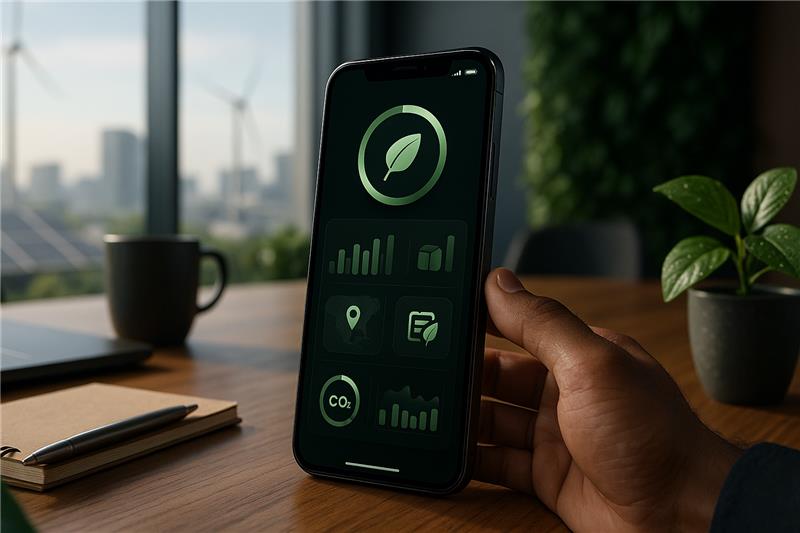
The climate clock is ticking fast, and mobile apps are under a new spotlight. These apps are becoming climate offenders, as they contribute to global warming and increased greenhouse gas emissions. Currently, more than 7 billion people use mobile apps, which generate approximately 0.75 grams of CO2 emissions.
Ultimately, these digital products consume vast amounts of energy through data transfers, cloud storage, and inefficient code practices. With billions of active users spending countless hours on apps every day, their impact on the environment is mounting rapidly.
This is why modern consumers increasingly expect sustainability, creating a need and business opportunity to develop green apps. So, emerging businesses need to choose green app development to reduce backend energy loads, lower infrastructure costs, meet evolving standards, and attract ‘green-minded’ customers.
In this blog, we’ll dive deep into the comprehensive guide to green app development to help you build your next green app. Let’s get started:
What is the Difference Between Green App Development and Traditional Development?
Green app development is a process of designing, building, and maintaining mobile apps with minimal environmental impact throughout their lifecycle. This approach focuses on energy efficiency, responsible data usage, low-resource architecture, and sustainable infrastructure.
On the other hand, traditional development prioritizes performance and features without thinking about environmental costs. But green app development balances functionality with sustainability. This results in optimized battery usage, minimized background processes, reduced server calls, and eliminated bloated code, taxing devices, and networks.
| Aspect | Green App Development | Traditional App Development |
| Primary Focus | Energy efficiency, sustainability, and reduced carbon footprint | Functionality, speed-to-market, and user experience |
| Technology Choices | Prioritizes low-energy frameworks, cloud optimization, and eco-friendly stacks | Selects tech purely based on performance, familiarity, or feature set |
| Resource Consumption | Optimized to use minimal device, network, and server resources | May lead to higher energy use due to heavy processing or poor optimization |
| Design Approach | Emphasizes dark modes, minimal animations, and efficient screen usage | Focuses more on visual appeal and interactivity, even if resource-heavy |
| Cloud & Server Optimization | Uses green cloud providers, serverless architecture, and efficient backend scaling | Often deploys standard cloud setups with less focus on environmental impact |
| Development Goals | Balance between performance and ecological impact | Maximize speed, features, and user satisfaction |
| End-User Awareness | Sometimes includes sustainability indicators or green usage tips for users | Rarely communicates sustainability to end users |
| Compliance & Certification | May align with sustainable development goals (SDGs), green tech standards, or carbon offset programs | Typically not aligned with sustainability frameworks |
| Long-Term Impact | Lower energy use, smaller carbon footprint, and environmental responsibility | Higher energy demand, possible contribution to digital pollution |
Benefits of Green App Development For Businesses
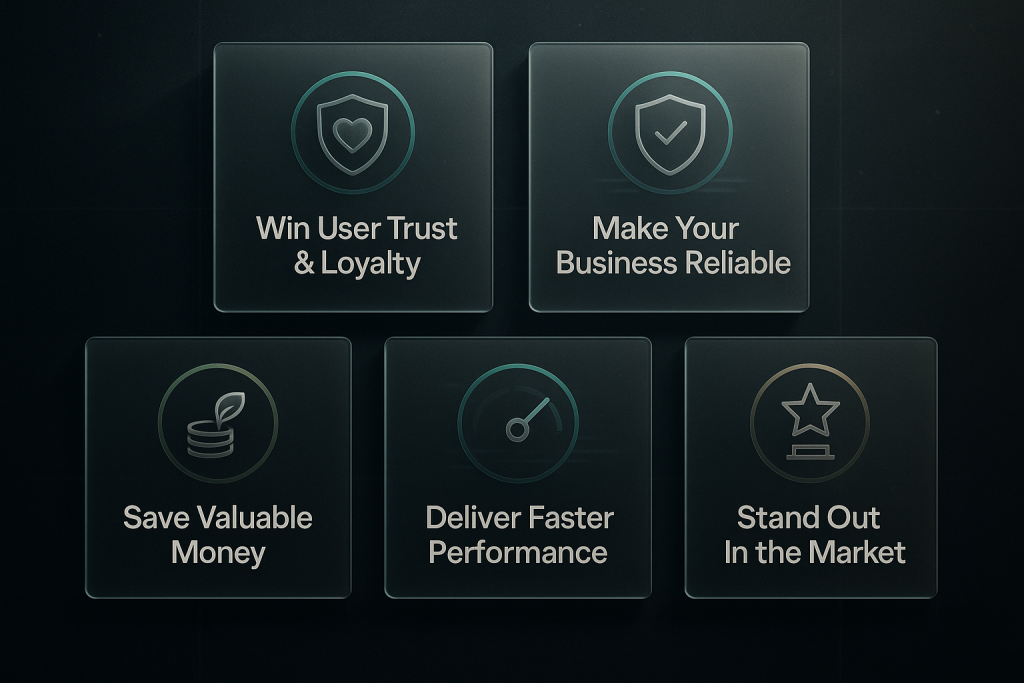
Understanding the concept of green app development reveals that it’s not just an eco-friendly initiative but also a smart, forward-thinking business strategy that has several business benefits. So, let’s explore why you should adopt eco-friendly app development to grow your business:
1. Win the Loyalty of Eco-Conscious Users
Consumers today care about their data, and they want to know how much power their app consumes. It means that building a sustainable app can increase app adoption. Notifying users that you’re reducing digital carbon footprints can make them stick around and advocate for your brand, or they would like to navigate through your app.
2. Position Your Business as Sustainability-First
Governments and platforms (like Google & Apple) are slowly encouraging greener digital practices. By choosing green app development, you can be ahead of regulations and trends without having the hassle of catching up when standards tighten. This approach of building a green Google app can help you position your business as sustainability-first, resulting in a good brand image.
3. Cut Cloud and Infrastructure Costs Smartly
A green social media app is built lean with fewer backend calls. These apps process data efficiently and require less server energy. This reduces your cloud usage bills, storage demands, and hosting costs in the long run. Partnering with an experienced company can help you get a complete roadmap.
4. Deliver Faster Performance
Eco-friendly code and UX are optimized for speed, reduced animation load, and lower background processes. This improves app performance while minimizing battery drainage, which is a direct user benefit. That’s how businesses can get more users and foster loyalty.
5. Stand Out in a Saturated App Market
Green apps are new and rare in the app world. By building a sustainable and green app, you can stand out in the app stores, pitches, and product marketing even before the app launch. This creates anticipation among users and makes your business famous. But you should integrate key features of your green app during the MVP phase to make your users happy and stand out in the competitive market.
Green App Development: Step-by-Step Process
Now that you know the benefits of Green app development, it’s time to take a look at the important steps. These steps should be followed properly to create high-performing and intuitive sustainability apps:
Step 1: Define Your Goals Clearly
The first step of the process is defining what ‘green’ means for your app, along with the impact of green app development. Ask yourself some important questions like: Do you want to reduce backend energy consumption? Extend battery life? Replace wasteful physical processes? Promote a sustainable lifestyle? Answering these questions will help you align your development efforts with environmental targets and achieve a holistic approach to sustainability.
Step 2: Choose an Eco-Conscious Tech Stack
Always choose eco-friendly technologies for sustainable living and get high-class performance. Prefer using efficient languages like Kotlin or Swift for Android and iOS, respectively. Leverage cross-platform frameworks like Flutter or React Native to reduce development footprint. You should opt for Progressive Web Apps where native functionality isn’t that much critical.
Step 3: Designing For Energy-Efficiency
Your design decisions play a huge role in how much energy is consumed by the app. In eco apps, design is not just a matter of appearance but optimization. Dark-mode UI designs, compressed media assets, and sparse layouts all equate to less energy that is used for rendering and user interaction. This makes for an environment that is friendly to devices and more usable when bandwidth is tight.
Step 4: Writing Resource-Conscious Code
Every green app needs efficient computing at its very core. Developers must program with the intention of MVP development, simultaneously focusing on clean architecture, CPU usage, and data-handling decisions. By cutting down unnecessary calls to an API, keeping processes in the background at a bare minimum, and caching repeat content, you’re directly cutting down on energy consumption by the app and the device. Every choice made in developing a solution will ripple down to impact; thus, performance optimization is not only a technical goal but an ethical one.
Step 5: Implement Eco-Friendly Functionalities
This is where your green app begins to take shape. It is in this stage that the environmentally friendly essential features are integrated, which are not just nice-to-haves but also lessen energy consumption. If your eco-friendly shopping apps require integrating emerging technologies to deliver greater value, keep at it. In cases where advanced tech can be introduced, prefer lightweight on-device models over large ones that keep on depending on cloud servers.
Step 6: Test for Environmental Performance
The development phase doesn’t end at building the mobile app. Before launching it on the targeted platform, do an exhaustive test of the app with specialized tools to check its battery usage, data consumption, and server load. Concentrate on expunging inefficiencies present in real-time scenarios and accelerating software delivery to get early feedback and success.
Step 7: Monitor and Maintain the App
Post-deployment, it is critical to continuously monitor and maintain your green app to keep track of its energy consumption and user interaction, and system performance throughout the run. This is standing and ongoing for releasing an update to fix bugs, introducing new features, optimizing performance, maintaining efficiency, and reducing technical debt.
How Much Does Green App Development Cost?
The cost of building environmental apps can vary depending on your app’s complexity, chosen tech stack, sustainability goals, and the experience level of your development team. The cost ranges between $20,000 – $80,000+ or more. On average, a green icon app may cost 10-20% more upfront compared to traditional app development. This is because of the extra time spent on optimization, performance audits, eco-conscious design decisions, and the use of sustainable cloud infrastructure.
Final Thoughts
Green apps are the future of scalable, ethical, and profitable mobile innovation. Green app development provides a way for startups to align with eco-conscious consumers and ethical practices. Being a startup owner, you need to partner with an experienced mobile app development company to build your sustainability app. You can take a look at the companies listed on AppFirmsReview to select the best partner for your business.
FAQs
Q1. What is Green App Development?
Green app development focuses on minimizing the environmental impact of mobile apps throughout the entire lifecycle. This involves designing, building, and deploying apps with a reduced carbon footprint.
Q2. How can mobile apps be made eco-friendly?
Mobile apps can be made eco-friendly by optimizing performance, minimizing resource usage, and incorporating sustainable features. This includes optimizing code, reducing app size, managing memory, and utilizing cloud computing.
Q3. What are the benefits of building a green app?
Building a green app offers several benefits, including reduced operational costs, enhanced brand image, and increased user engagement, all while contributing to a more sustainable digital future.
Q4. What technologies support green app development?
Green app development uses technologies that minimize the environmental impact of software. These technologies are AI and machine learning, cloud computing, edge computing, and green blockchain solutions.
Q5. How are Green Apps different from Traditional Mobile Applications?
Green apps are designed to minimize their environmental impact, and they achieve this by optimizing code for energy efficiency and reducing data consumption. Be it a tiny green app or a green social media app, these apps promote eco-friendly user behavior. On the other hand, traditional apps are developed and used without considering the environmental impact, such as focusing on functionality and UI, large data transfers, and consuming significant battery power.